

Subject property
Recommended value
$835,000
A great CMA combines the right comparable homes, recent sales, current competition, market-supported adjustments and an in-person understanding of your property—not just an online estimate or a neighbor's sale price.
By James Brebner, REALTOR® · Published November 13, 2026 · Last reviewed November 13, 2026
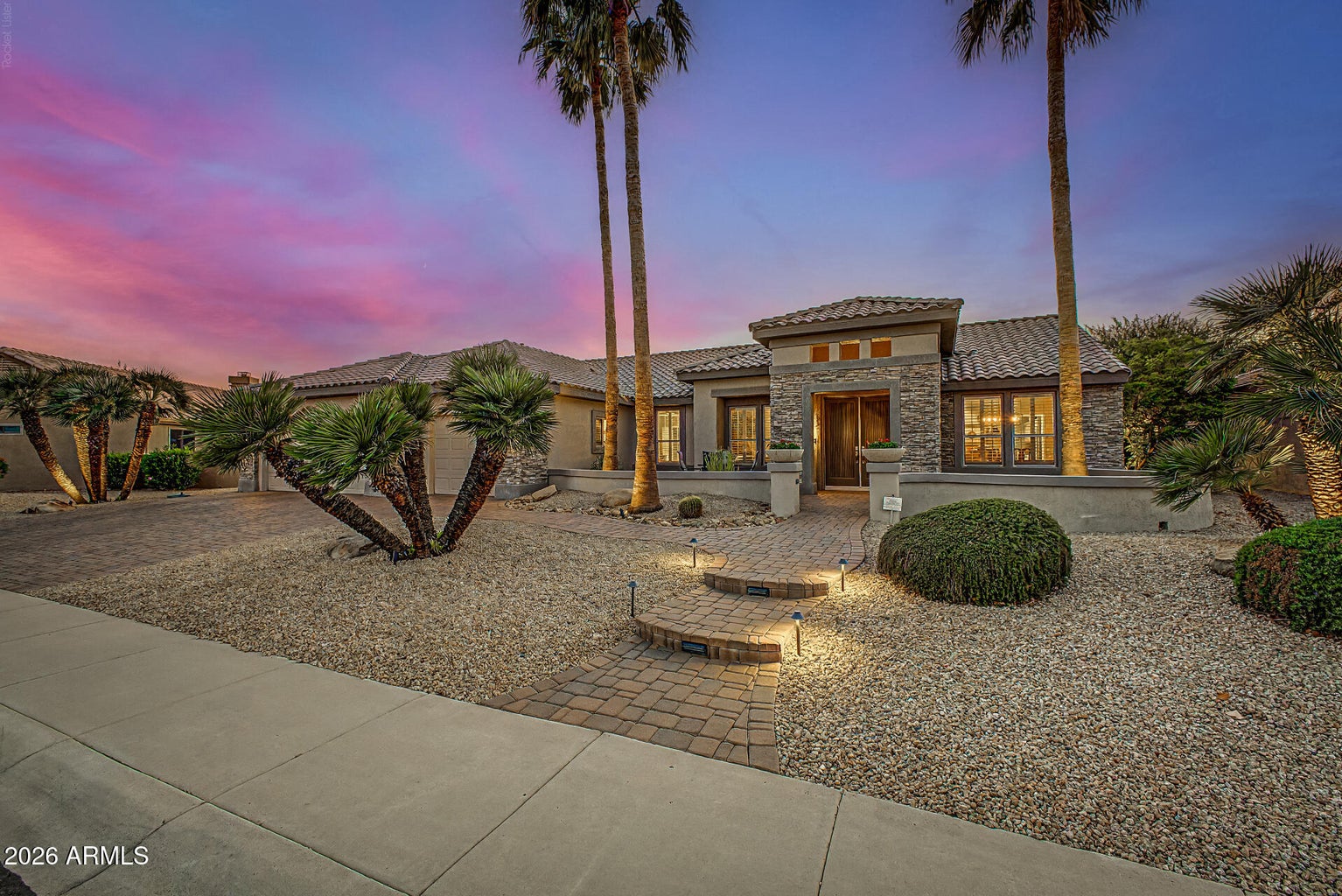
How the right pricing analysis can make a big difference when selling your home.
If you're thinking about selling your home, one of the first questions you'll probably ask is, "What's my home worth?"
It's a simple question, but arriving at the right answer takes more than looking at what your neighbor's house sold for or checking an online home-value estimate.
That's where a Comparative Market Analysis (CMA) comes in.
A well-prepared CMA is one of the most valuable tools a real estate professional can provide. But not all CMAs are created equal. Understanding what goes into a great one can help you make a more informed decision about pricing your home.
The foundation of any good CMA is selecting comparable properties, often called "comps."
But just because two homes are in the same neighborhood doesn't mean they're truly comparable.
A knowledgeable real estate agent looks for homes with similar characteristics, including:
For example, here in The Grand in Surprise, Arizona, two homes with the same floor plan can have significantly different market values. One might have an original kitchen and bathrooms, while another has been completely remodeled. One might back to another home, while the other overlooks a golf course.
The key isn't finding homes that look similar on paper. It's finding homes that buyers would consider reasonable alternatives to yours.
A great CMA doesn't just examine homes that have already sold. It considers three important categories.
These are often the strongest indicators of market value. They show what buyers were willing to pay and what sellers were willing to accept.
These homes tell us what buyers will be comparing against your property if you list today.
If three similar homes are currently available for $500,000, pricing yours at $550,000 may be difficult to justify unless it offers something meaningfully better.
Homes under contract can provide valuable clues about current buyer activity and demand. While the final negotiated prices usually aren't available until closing, the asking prices and time spent on the market can still provide useful information.
A strong CMA considers all three categories rather than relying solely on historical sales.
This is where experience and local market knowledge become especially important.
Imagine two homes with the same floor plan. One sold for $525,000, but it had a swimming pool, updated kitchen, and premium golf course lot. Your home has none of those features.
Would it be reasonable to assume your home is worth $525,000?
Probably not.
A thorough CMA considers the value buyers place on these differences and makes appropriate adjustments.
However, here's something many homeowners don't realize:
The cost of an improvement isn't necessarily the amount it adds to your home's market value.
Spending $60,000 remodeling a kitchen doesn't automatically increase the home's value by $60,000. Likewise, a $75,000 swimming pool may contribute considerably less than its installation cost.
The best adjustments are supported by actual market evidence whenever possible, not arbitrary dollar amounts.
Real estate values aren't static. They change as supply, demand, interest rates, and buyer preferences change.
A home that sold six months ago may not reflect today's market conditions.
An effective CMA examines questions such as:
For example, if comparable homes are sitting on the market longer and sellers are making price reductions, those trends should influence your pricing strategy.
A CMA should reflect the market you're entering today, not simply the market that existed several months ago.
Even in neighborhoods where many homes share the same floor plans, no two properties are exactly alike.
Some differences are obvious, such as a remodeled kitchen or an additional garage bay.
Others are more subtle.
A home with a desirable orientation, attractive landscaping, greater privacy, or a particularly appealing outdoor living area may attract stronger buyer interest than an otherwise similar property.
Conversely, deferred maintenance, an aging roof, or outdated mechanical systems can affect how buyers perceive value.
This is one reason I believe an in-person property visit is so important when preparing a detailed CMA.
Photos, public records, and MLS data provide a starting point, but walking through a home helps identify characteristics that numbers alone may miss.
A CMA isn't an appraisal, and it shouldn't pretend to identify a home's value down to the last dollar.
Instead, a well-supported CMA typically establishes a reasonable market-value range based on available evidence.
From there, the homeowner and real estate professional can discuss an appropriate listing strategy.
And there's an important distinction between market value and asking price.
Market value represents what a property is likely to sell for under current market conditions. Asking price is a strategic decision intended to attract qualified buyers and generate offers.
Sometimes those numbers are the same. Sometimes a different asking price makes sense based on competition, demand, and the seller's objectives.
The goal is to position the home effectively without leaving money on the table or discouraging potential buyers.
Perhaps the most important characteristic of a great CMA is objectivity.
It's natural for homeowners to have an emotional connection to their property. You've invested time, money, and memories into your home.
But buyers don't necessarily place the same value on those things.
A real estate professional should be willing to explain what the market data supports, even when that number differs from the homeowner's expectations.
Be cautious when an agent suggests a significantly higher listing price than other agents without providing convincing evidence.
An overly optimistic price may sound appealing initially, but it can lead to fewer showings, extended time on the market, and eventual price reductions.
The purpose of a CMA isn't to tell you what you want your home to be worth. It's to help you understand what today's buyers are likely to pay.
Today's real estate professionals have access to an incredible amount of information. But information alone doesn't create an accurate pricing analysis.
A great CMA requires selecting the right comparable properties, evaluating meaningful differences, understanding current market conditions, and applying sound professional judgment.
At Equity Advantage, I believe homeowners deserve a thoughtful, transparent explanation of their home's potential market value before making one of their most important financial decisions.
Whether you're planning to sell soon or simply curious about your home's value, a professionally prepared CMA can provide valuable insight.
I'd welcome the opportunity to visit your home, review its unique features, and prepare a detailed Comparative Market Analysis so you can make an informed decision about your next move.
Request a Comparative Market Analysis for your home.
James Brebner, REALTOR®
Equity Advantage | Realty ONE Group
Arizona license SA718354000
623-244-9777 · jim@equityadvantageaz.com
The Grand · A pricing example
These photographs and figures supplied by James show how condition, views, roofing, HVAC and garage space can affect a comparison. The subject property's recommended value in this example is $835,000.
Recommended value
$835,000
Sold for $805,000
March 9, 2026 · Listed for $825,000
Sold for $709,777
April 28, 2026 · Listed for $729,777
Sold for $785,000
March 18, 2026 · Listed for $811,000
Source: James Brebner's supplied CMA example, approved for this article. These are property-specific professional judgments, not fixed premiums for every home, improvement costs, an appraisal or a guarantee of sale price. The recommended value reflects the overall analysis, not an automatic average of the comparable sales.
The purpose of a CMA isn't to tell you what you want your home to be worth. It's to help you understand what today's buyers are likely to pay. The right analysis combines comparable properties, current market conditions and a thoughtful visit to your home.